By: Julian Mackool
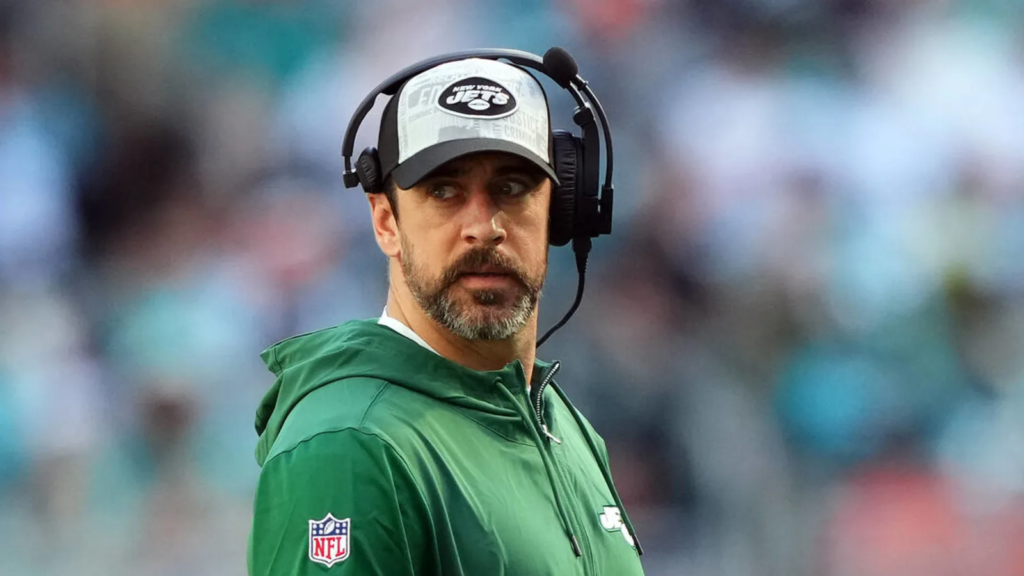
The New York Jets have had a less-than-desired start to the season. Halfway through, the Jets sit at 2-6, and it’s already been a roller coaster. Former head coach Robert Saleh was fired after a 2-3 start, the Jets traded for Davante Adams, and they demoted offensive coordinator Nathaniel Hackett from playcalling. All these moves and acquisitions were made to favor Aaron Rodgers. Since these changes, the Jets have lost three straight games, revealing more problems than anticipated. However, Aaron Rodgers bears the most blame and must be held accountable.
Entering the season, Rodgers was returning from a torn Achilles after playing just four snaps last year. Following a disappointing previous season, expectations were high for this Jets team. The Jets retained Hackett, who had worked with Rodgers in Green Bay and was brought in for him last year. Wide receiver Allen Lazard, also a former teammate in Green Bay, joined the team, along with three of five new offensive linemen to support Rodgers. With foundational pieces like wide receiver Garrett Wilson, running back Breece Hall, and a top-five defense last year, the Jets were primed for Super Bowl aspirations.
Five weeks into the season, with a 2-3 record and growing drama between Saleh and Rodgers, the Jets fired Saleh to spark a turnaround. They also demoted Hackett from playcalling due to offensive struggles. The following week, despite the changes intended to support Rodgers, the Jets lost to the Buffalo Bills in primetime. Although the offense appeared improved, something was still missing. After the loss to the Bills, the Jets traded for All-Pro receiver Davante Adams, who was Rodgers’ best target in Green Bay. This acquisition seemed to be the missing piece, demonstrating the Jets’ commitment to helping Rodgers. However, since Adams’ arrival, the Jets have lost their next two games.
Now, halfway through the season, the Jets look worse with Rodgers than they did last year without him. All the moves—from firing coaches to acquiring former teammates—have done nothing to help the team succeed. At this point, it’s evident that Rodgers is the problem. The Jets don’t feel like a cohesive unit; if they appear to be an “Aaron Rodgers team,” then he must shoulder the blame. There is still time to turn things around, but there’s no one left to point fingers at. If the Jets want to win, they must play as a team, not just as an extension of Aaron Rodgers.
Leave a Reply