By: Brooke Johnpier
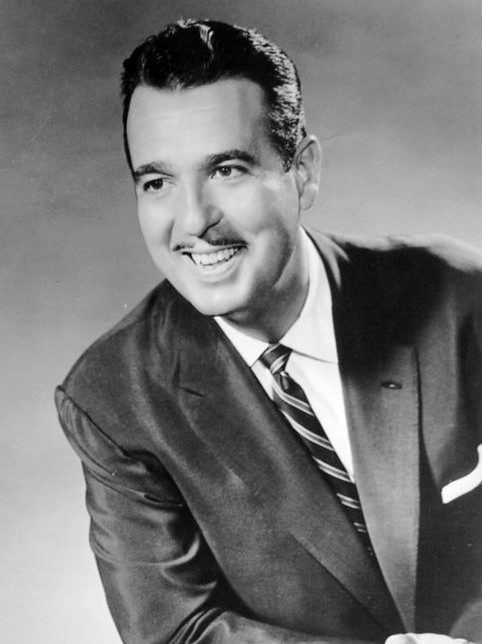
Tennesse Ernie Ford, born Ernest Jennings Ford, was an American singer and television host. He enjoyed success in the country and western, pop, and gospel music genres. He was best known for his deep, rich baritone voice, and down-home humor that made him relatable.
Ford was born in Fordtown, Tennessee, on February 13, 1919. His love and interest for music started early, as he listened to country and western musicians on the radio, and in-person at live performances.
Radio would become Ford’s first passion during his high school years. Ford began a radio career as an announcer at WOPI-AM in Bristol, Tennessee. In 1938, Ford had a change of heart and left the station to go study classical music at the Cincinatti Conservatory of Music in Ohio.
A year later, Ford returned to his announcing job and would keep it until 1941, where he would become a first lieutenant in the Army Air Corps. He was the bombardier on a B-29 Superfortress during WWII, but never saw action as the war ended before he was sent to Japan. Ford became a bombing instructor in Victorville, California, though.
After the war ended, Ford got another radio station gig. He was assigned to do a country music show on KFXM in the mornings, and to differentiate himself from others he came up with an on-air personality called “Tennessee Ernie.” He became wildly popular, and within a few years he was doing musical tours.
At another radio station, Ford got noticed by a Capitol Records scout. Ford signed a deal with Capitol and became a local TV star by starring in Hometown Jamboree.
Throughout the 1950’s, Ford released nearly 50 country singles, many of which made the Billboard charts. His early records, The Shotgun Boogie, and Blackberry Boogie, were exciting, upbeat albums that incorporated the genres of boogie-woogie and country. One of these singles, “I’ll Never Be Free,” was a duet between Ford and pop singer Kay Starr. The song was a major crossover hit within the pop and country genres. Another one of the singles, “False Hearted Girl,” was another duet, this time with Ella Mae Morse. It was Capitol’s top-selling single for their Country and Hillbilly division.
In 1954, Ford became the host of NBC’s quiz show, College of Musical Knowledge. Also in 1954, Ford appeared on three episodes of I Love Lucy, as “Cousin Ernie” who was a “country bumpkin.”
A year later, Ford recorded “The Ballad of Davy Crockett,” which landed number four on the country music charts. Ford also had another hit that year, this one unexpected.
First recorded in 1946 by Merle Travis, “Sixteen Tons” was a song that was based off of a coal miner’s lament. Unlike the upbeat, happy pop and rock songs on the charts at the time, this song was a stark contrast. Nevertheless, the song stayed number one for ten weeks on the country charts, and seven weeks on the pop charts. The song became Ford’s signature and made him a crossover star.
From October 4, 1956, to June 29, 1961, Ford had his own show on NBC called The Ford Show. In 1956, Ford also released his first gospel album, Hymns. The album would stay on Billboard’s Top Albums chart for 277 consecutive weeks. Another one of his gospel albums, Great Gospel Songs, won a Grammy award in 1964, and was nominated for many other awards.
Ford had an amazing career of radio, television, and music up until his death on October 17, 1991. Ford suffered severe liver failure at Dulles Airport after leaving the White House where he had attended a dinner with President George H. W. Bush on September 28, 1991. Ford died in Reston, Virginia, less than a month later.
Ford was a very talented man. His musical works will forever stand the test of time, and he was one of the pioneers of radio and television. If you haven’t listened to “Sixteen Tons” yet, do so. You won’t regret it, I promise.
Want to share your thoughts? Have a band/artist you want to be featured? Email Brooke at johnpibl23@bonaventure.edu!
Leave a Reply